

Industrial Safety Equipment
Head-to-toe protection designed for the harshest industrial and construction environments
Head Protection
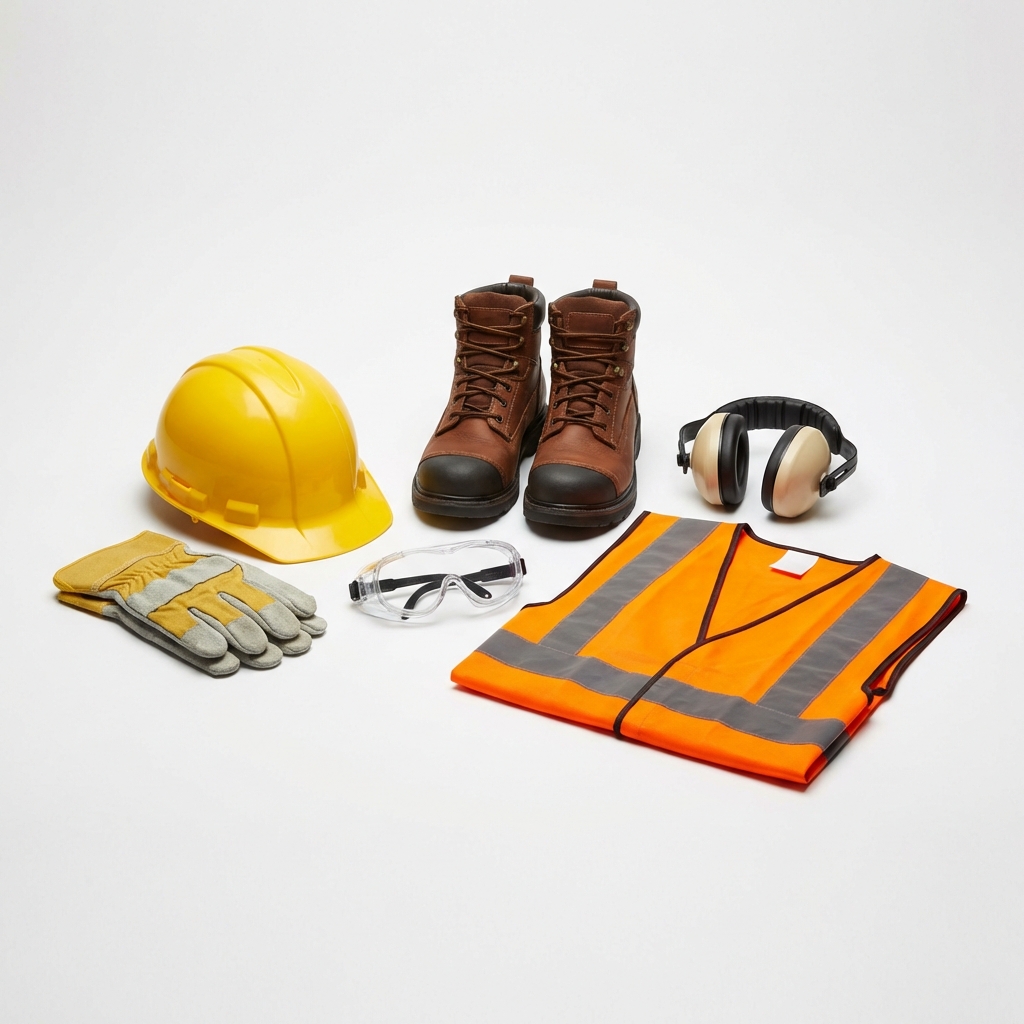
Impact-resistant industrial safety helmets (Hard Hats) and bump caps designed to absorb shock from falling objects. Available with ratchet adjustment, sweatbands, and chin straps.
Hand & Arm Protection
Specialized safety gloves for mechanical hazards, chemical handling, and electrical work. Tested rigorously to EN 388 standards for abrasion, cut, tear, and puncture resistance.
- Cut-Resistant Gloves — PU coated, HPPE fibers (Level 3/5)
- Chemical Gloves — Nitrile and Neoprene for acids/solvents
- Electrical Gloves — Insulating rubber up to 33kV class
- Thermal Gloves — Heat/Cold resistance for foundries
Eye & Face Protection
Polycarbonate safety spectacles and full face shields to protect against flying debris, chemical splashes, and UV radiation. Available in clear, smoked, and anti-fog variants (ANSI Z87.1).
Hearing Protection
Comfortable earplugs and earmuffs with high Noise Reduction Ratings (NRR) to prevent noise-induced hearing loss in high-decibel factory environments (compressor rooms, stamping presses).
- PU Foam Earplugs — Corded & uncorded (NRR 29-32dB)
- Reusable Earplugs — Silicone flanged design
- Ear Muffs — Helmet-mounted or over-the-head bands
- Brands: 3M E-A-R, Honeywell Howard Leight
Foot Protection
Industrial safety shoes and boots fitted with steel or composite toe caps to prevent crush injuries. Features slip-resistant (SRC), oil-resistant, and anti-static PU soles.
- Safety Shoes — Leather upper, steel/composite toe (200 Joules)
- Gumboots / Wellington Boots — PVC/Rubber for wet/chemical areas
- Electrical Safety Shoes — ESD / Di-electric soles
Fall & Body Protection
Critical safety gear for working at heights and hazardous environments. Full body harnesses with energy-absorbing lanyards, alongside high-visibility and specialized protective clothing.
- Full Body Harnesses — Single/Double lanyard with scaffolding hooks
- Fall Arresters — Retractable lifelines and rope grabs
- Body Coveralls — Disposable Tyvek and flame-retardant suits
- High-Visibility — Reflective traffic vests & jackets
Understanding Safety Ratings (EN & NRR)
How to decode safety equipment specifications for proper selection
Decoding EN 388 Glove Ratings
Mechanical safety gloves are rated under the EN 388 standard using a 4-digit code (e.g., 4121). These numbers represent Abrasion (1-4), Cut (1-5), Tear (1-4), and Puncture (1-4) resistance. A higher number indicates better protection. If your workers handle sharp sheet metal or glass, prioritize a Cut score of 3 or higher. Additionally, look for ISO 13997 cut ratings (A to F) for precise blade-cut resistance.
Understanding NRR (Noise Reduction Rating)
To prevent hearing loss, OSHA mandates hearing protection if workplace noise exceeds 85 decibels (dBA) over an 8-hour shift. The Noise Reduction Rating (NRR) specifies how much noise is blocked. For example, a 3M earplug with an NRR of 30dB worn in a 100 dBA environment reduces exposure to 70 dBA (safe level). For extreme noise (e.g., heavy forging), use dual protection: foam earplugs worn *underneath* heavy-duty earmuffs.
Sectors Requiring Critical PPE
Supplying mandated safety gear across various high-risk industries
Construction & Infrastructure
Full body harnesses (Karam), scaffolding lanyards, impact-resistant hard hats, and steel-toe safety boots for high-rise, metro rail, and highway construction sites.
Manufacturing & Engineering
Cut-resistant PU gloves, anti-fog safety spectacles, and heavy-duty ear muffs for CNC machine shops, stamping presses, and automotive assembly lines.
Chemical & Pharmaceutical
Nitrile chemical-resistant gloves, full face respirators, half-mask gas filters, and disposable coveralls protecting against hazardous vapors, API powders, and acid splashes.
Electrical Substations
Arc-flash suits, dielectric electrical rubber gloves (up to 33kV), PVC gumboots, and insulated helmets for linemen and electrical maintenance contractors.
Global Safety Standards
Your Trusted PPE Supplier
Certified Authentic Gear
We are authorized distributors for 3M, Honeywell, and Karam. Avoid cheap counterfeits—our PPE comes with batch certificates ensuring they meet rigorous IS/EN testing standards.
Bulk Corporate Supply
We handle annual rate contracts (ARC) for large factories across Maharashtra, providing continuous scheduled supply of consumables like earplugs and gloves without stockouts.
Safety Audits & Training
Partnered with Karam and 3M, we can arrange for factory safety audits, fit-testing for respirators, and training sessions on how to correctly wear fall harnesses.
Integrated Project Supply
Reduce vendors. Along with safety gear, we supply the complete industrial lighting, cable infrastructure, and electrical panels for your project.
Frequently Asked Questions
Expert clarification on PPE and safety compliance
What is the difference between an N95 and a P100 respirator?
An N95 mask filters out at least 95% of airborne particles but is Not resistant to oil (N series). It is standard for dust, sweeping, and non-oil-based aerosols. A P100 respirator filters out at least 99.97% of particles and is strongly Oil-Proof (P series). P100 filters, typically used on half-face or full-face masks, offer the highest level of particulate protection for severe industrial environments.
How often should a safety helmet (hard hat) be replaced?
As a general industry rule, the internal suspension (which absorbs the shock) should be replaced every 12 months, and the entire outer hard hat shell should be replaced every 2 to 5 years depending on the manufacturer's guidelines. However, if the helmet sustains a heavy impact, deep scratches, or is exposed to extreme UV/chemicals making it brittle, it must be replaced immediately, regardless of age.
What does "Steel Toe" vs "Composite Toe" mean in safety shoes?
Both types provide rigorous protection (usually tested to withstand 200 Joules of impact). A Steel Toe is the traditional standard—very strong but heavier and conducts cold/heat. A Composite Toe is made from non-metal materials (Kevlar, carbon fiber, plastic). It is lighter, non-conductive (great for electrical work), doesn't trigger metal detectors, and doesn't get icy cold in winter.
When should I use a double-lanyard fall protection harness?
A double-lanyard (twin-leg) harness enables 100% Tie-Off. While working at height on structures like scaffolding or telecom towers, a worker must detach one hook to move past an obstacle. With a double lanyard, one hook remains safely anchored while the other is moved. If using a single lanyard, the worker is completely unprotected during the transfer. Thus, double lanyards are mandatory for active climbing/structural work.
Can I wash and reuse Nitrile chemical gloves?
Heavy-duty, unsupported Nitrile chemical gloves can often be rinsed and reused several times, provided they are thoroughly decontaminated according to manufacturer instructions. However, thin, disposable Nitrile examination gloves are single-use only. Always inspect reusable chemical gloves for pinhole leaks, swelling, discoloration, or stiffness before every use, and discard immediately if compromised.
What anti-vibration gloves do you recommend for power tools?
For operating jackhammers, grinders, and heavy pneumatic tools, we supply specialized Anti-Vibration gloves compliant with EN ISO 10819. These feature chloroprene rubber or specialized gel padded palms that dampen low to high-frequency vibrations, significantly reducing the risk of Hand-Arm Vibration Syndrome (HAVS) and improving worker stamina.
Are your safety products compliant with Indian factory audits?
Yes. All critical PPE provided by Jay Enterprises (including Karam harnesses, 3M masks, and safety shoes) comply with relevant BIS (Bureau of Indian Standards) / ISI marks. This ensures you pass government Factory Inspector audits and ISO 45001 safety management audits without compliance issues.
Do you supply electrical arc safety clothing?
Yes, we supply specialized Arc Flash Suits and Electrical Di-electric boots and gloves for high-voltage panel operators and linemen. Arc flash gear is rated in cal/cm² (e.g., 8 cal/cm² or 40 cal/cm²) to protect against the extreme heat of an electrical explosion. This is a critical requirement for substation maintenance contractors.
Need Industrial Safety Equipment?
Get bulk/wholesale quotes for factory PPE requirements!